
 +234-703-1978-233
Brand Positioning
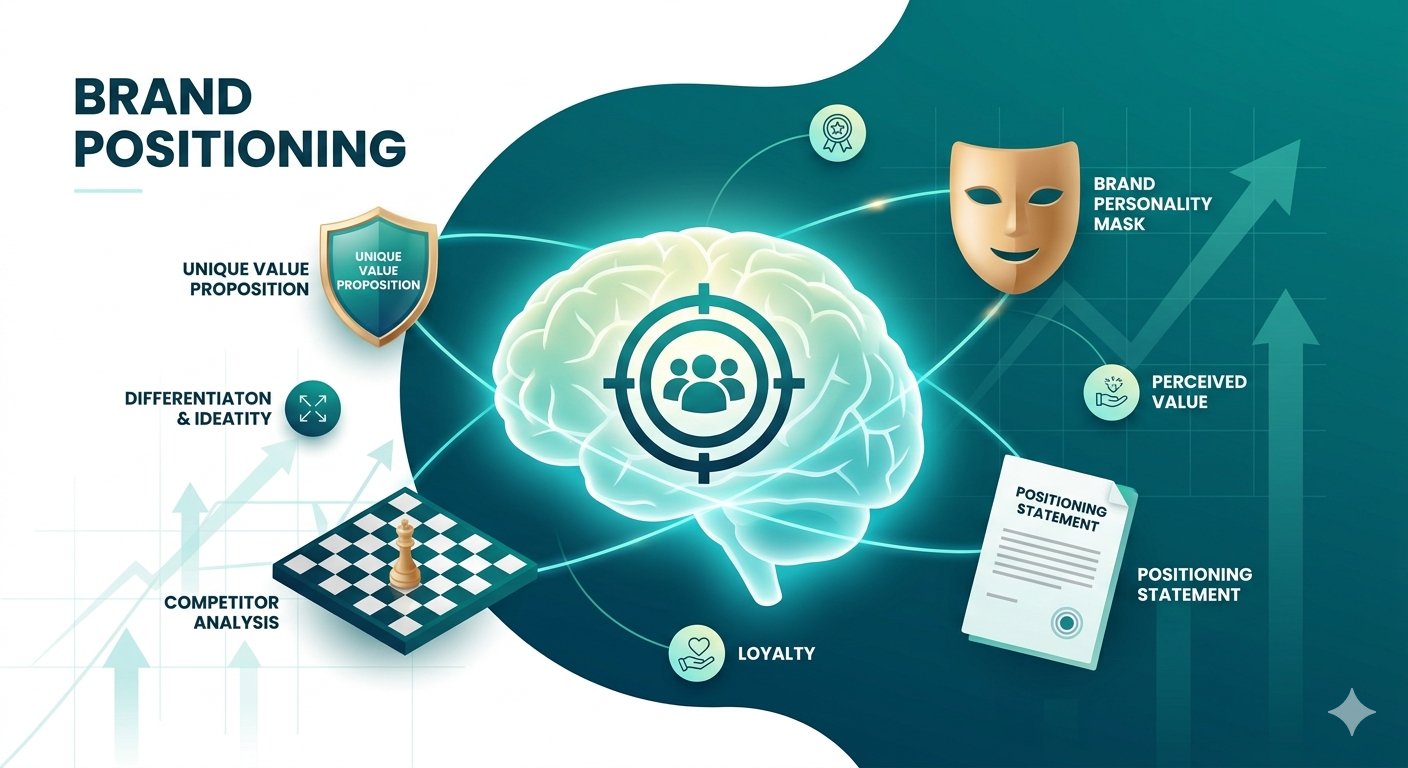
Brand Positioning: Standing Out in a Competitive Industry
In today’s hyper-competitive business landscape, simply having a great product or service is no longer enough. Customers are bombarded with countless options, making brand positioning the key differentiator that can determine whether your business thrives or gets lost in the noise.
Effective brand positioning helps you carve out a unique space in the minds of your target audience, allowing you to stand out from competitors and build lasting loyalty. Whether you’re a startup or an established company, mastering brand positioning strategies is essential for long-term success.

What is Brand Positioning?
Brand positioning is the strategic process of defining how your brand is perceived in the marketplace relative to your competitors. It involves crafting a clear, compelling message that highlights your unique value proposition (UVP) and resonates deeply with your ideal customers.
Think of brand positioning as the foundation of your marketing efforts. It answers critical questions like:
- What makes your brand different?
- Why should customers choose you over others?
- How do you want your audience to feel when they interact with your brand?
A strong brand positioning statement typically includes your target market, the benefit you provide, and the reason why you’re the best choice.
Why Brand Positioning Matters in a Competitive Industry
In saturated markets, consumers often struggle to distinguish between similar products. Without clear brand positioning, your business risks becoming a commodity where price becomes the only deciding factor.
Here’s why investing in brand positioning pays off:
- Differentiation: It helps you avoid direct price wars by emphasizing unique attributes.
- Customer Loyalty: A well-positioned brand creates emotional connections that foster repeat business and advocacy.
- Marketing Efficiency: Clear positioning guides all your marketing channels, ensuring consistent messaging that builds recognition faster.
- Higher Perceived Value: Customers are willing to pay premium prices for brands that occupy a distinct position in their minds.
Companies like Apple (innovation and premium experience), Volvo (safety), and Nike (inspiration and performance) have mastered brand positioning, allowing them to dominate their respective industries despite fierce competition.

Key Elements of Successful Brand Positioning
To create a powerful brand position, focus on these essential components:
1. Deep Understanding of Your Target Audience
Know your customers better than they know themselves. Conduct thorough market research to identify their pain points, desires, values, and behaviors. The more specific your buyer personas, the more effective your positioning will be.
2. Competitor Analysis
Map out your direct and indirect competitors. Identify gaps in the market where your brand can own a unique territory. Ask: What are they doing well? Where are they falling short?
3. Unique Value Proposition (UVP)
Your UVP is the core promise that sets you apart. It should be:
- Relevant to customer needs
- Unique compared to competitors
- Believable and deliverable
4. Brand Personality and Voice
Define how your brand communicates and behaves. Is it professional and trustworthy, fun and energetic, or bold and disruptive? Consistent personality builds emotional connections.
5. Clear Brand Positioning Statement
Craft a concise internal statement like:
“For [target audience], [your brand] is the [category] that delivers [key benefit] because [reason to believe].”
Proven Brand Positioning Strategies
Here are practical strategies to help your brand stand out:
1. Attribute Positioning
Own a specific feature or characteristic (e.g., fastest delivery, most eco-friendly).
2. Benefit Positioning
Focus on the primary benefit your customers gain (e.g., time-saving, cost-effective, or life-changing).
3. User Positioning
Associate your brand with a specific type of customer (e.g., for ambitious professionals or eco-conscious families).
4. Competitor Positioning
Directly contrast yourself against a market leader (e.g., “The affordable alternative to…”).
5. Category Positioning
Create or redefine a new category where you can be the obvious leader.
Steps to Develop Your Brand Positioning
Follow these actionable steps to build or refine your brand’s position:
- Conduct Research: Gather insights from customers, analyze competitors, and review industry trends.
- Identify Your Differentiators: Pinpoint what truly makes your offering special.
- Craft Your Positioning Statement: Write and test it internally.
- Develop Supporting Assets: Create visuals, messaging, and content that reinforce the position.
- Implement Across All Touchpoints: Ensure consistency on your website, social media, packaging, and advertising.
- Monitor and Adjust: Track performance and refine as market conditions change.

Common Brand Positioning Mistakes to Avoid
- Being too generic or trying to appeal to everyone
- Inconsistent messaging across channels
- Overpromising and underdelivering
- Ignoring evolving customer needs
- Copying competitors instead of innovating
Real-World Brand Positioning Examples
- Red Bull positioned itself as an energy drink for extreme sports enthusiasts and adventurous lifestyles, not just another beverage.
- Tesla owns the “innovative electric vehicle” space with a focus on sustainability and cutting-edge technology.
- Starbucks transformed coffee from a commodity into a premium “third place” experience.
These brands didn’t just sell products, they sold a distinct identity and emotional experience.
How to Measure Brand Positioning Success
Track these key metrics:
- Brand awareness and recall
- Customer perception surveys
- Market share growth
- Customer acquisition cost and lifetime value
- Social media sentiment and engagement
Tools like Google Analytics, surveys, and social listening platforms can provide valuable insights.
Conclusion: Make Brand Positioning Your Competitive Advantage
In a competitive industry, brand positioning is not optional, it’s essential for survival and growth. By clearly defining what makes your brand unique and consistently communicating that message, you can capture attention, build loyalty, and achieve sustainable success.
Start today by evaluating your current positioning. Are you blending in, or truly standing out? The brands that win are those that own a distinct space in their customers’ minds.
Ready to strengthen your brand positioning?
Audit your current strategy and take deliberate steps to differentiate yourself. Your future market position depends on it.
What’s your biggest challenge with brand positioning? Share in the comments below!
 Previous Post
 Next Post